
Media Contact:
Flavia Nakamatte
Executive Director
Katalemwa Cheshire Home (KCH)
Email: info@katalemwacheshirehome.org
Website: www.katalemwacheshirehome.org
Katalemwa Cheshire Home Steps Into Industry 4.0: Launches Revolutionary 3D Printing Technology to Modernize Assistive Device Production in Uganda
Supported by Humanity & Inclusion, KCH’s Assistive Technology Centre adopts additive manufacturing to drastically cut turn-around times and improve mobility access for persons with disabilities.
KAMPALA, UGANDA – November 10th, 2026 Katalemwa Cheshire Home (KCH), in partnership with Humanity & Inclusion (HI), will officially launch its new 3D Printing facility at its Assistive Technology Centre (ATC) on November 12, 2026. This landmark initiative introduces digital additive manufacturing into health and rehabilitation, transforming how orthotic and prosthetic technologies are produced in Uganda.
Uganda continues to face a rising demand for physical Assistive Technologies due to congenital conditions, road traffic accidents, diabetes-related amputations, and other severe injuries. Despite this demand, access to quality and affordable assistive technology remains severely restricted, particularly for low-income individuals and rural communities.
To bridge this gap, KCH is integrating Industry 4.0 tools including 3D digital scanning, Computer-Aided Design (CAD), and 3D printing (additive manufacturing) into its rehabilitation services.
Moving from Plaster to Precision: A Tech Transformation
Historically, producing supportive devices required a labor-intensive conventional method using Plaster of Paris (POP) casts. Technicians would wrap the patient’s limb in plaster, create a heavy mold, and manually carve the design. This process was time-consuming often taking 1 to 2 weeks per device and resulted in significant plaster waste.
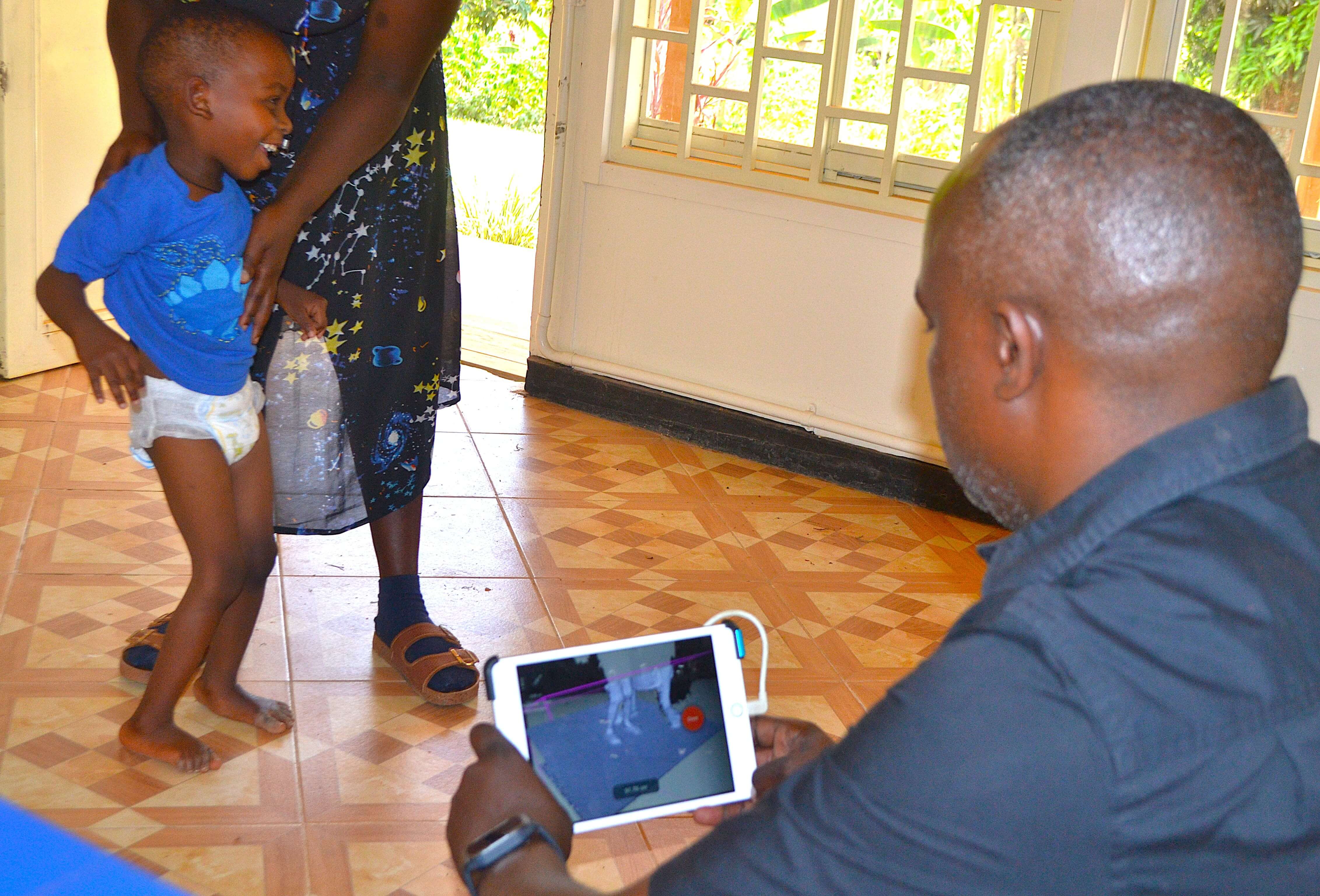
KCH technicians using 3D scanning to capture precise anatomical measurements for custom assistive devices.
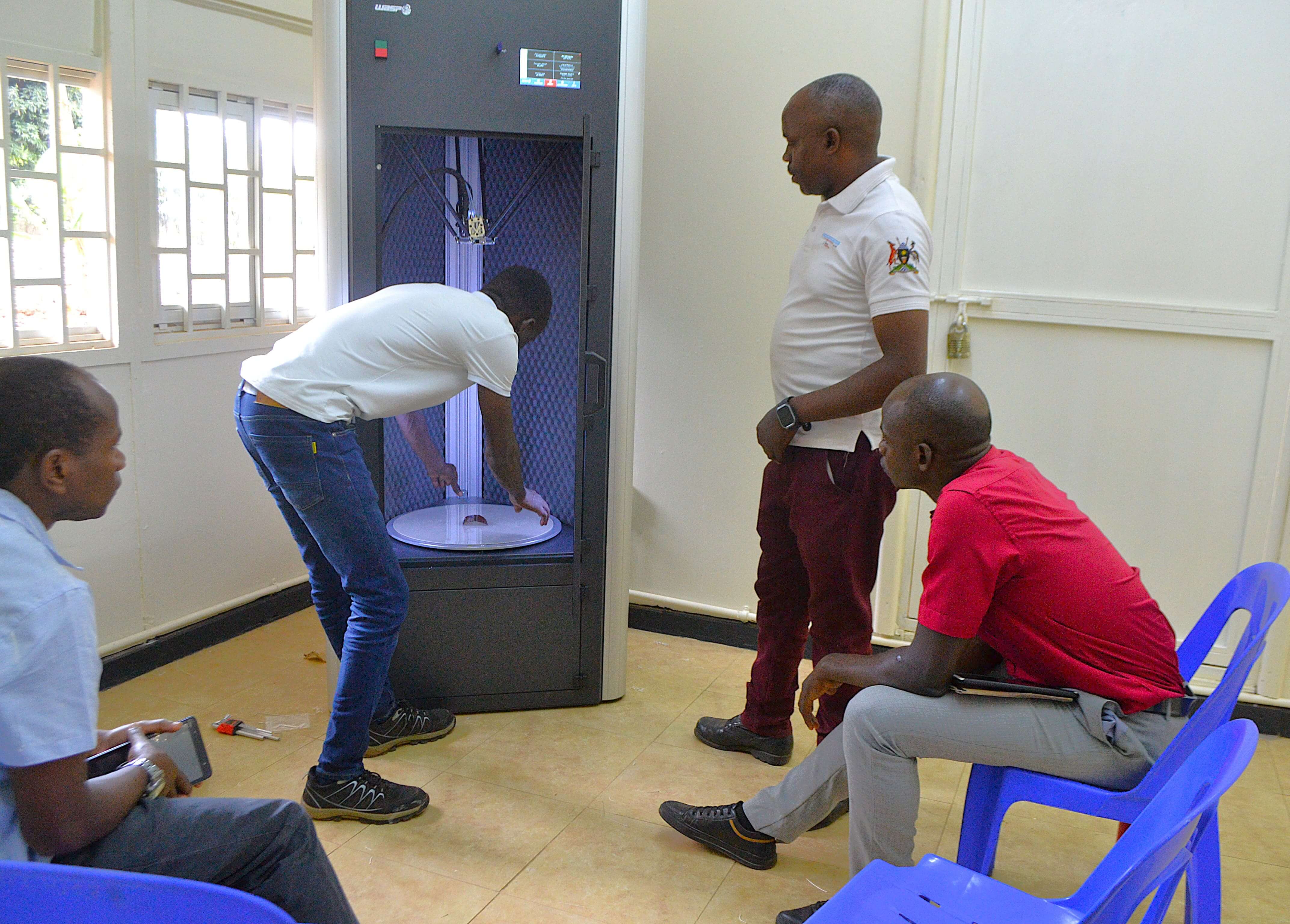
Technicians doing preliminary work before 3D printing.
With the newly established 3D Modeling Section:
- Drastic Time Savings: The digital workflow reduces production preparation time from weeks down to 1 to 4 days.
- Zero Material Waste: Digital 3D scanning eliminates the need for single-use POP powder and messy plaster molding.
- Superior Comfort & Precision: Digital scans capture a patient’s precise anatomical measurements, resulting in highly tailored, comfortable fits.
By integrating additive manufacturing into our Assistive Technology Centre, we are not only speeding up production, but we are also restoring dignity, independence, and opportunity. This technology allows us to serve more people in less time with higher accuracy, enabling children and youth with disabilities rejoin school, work, and community life sooner." Kenneth Nangai, Program Manager, KCH
A State-of-the-Art Facility Bridging the Tech Gap
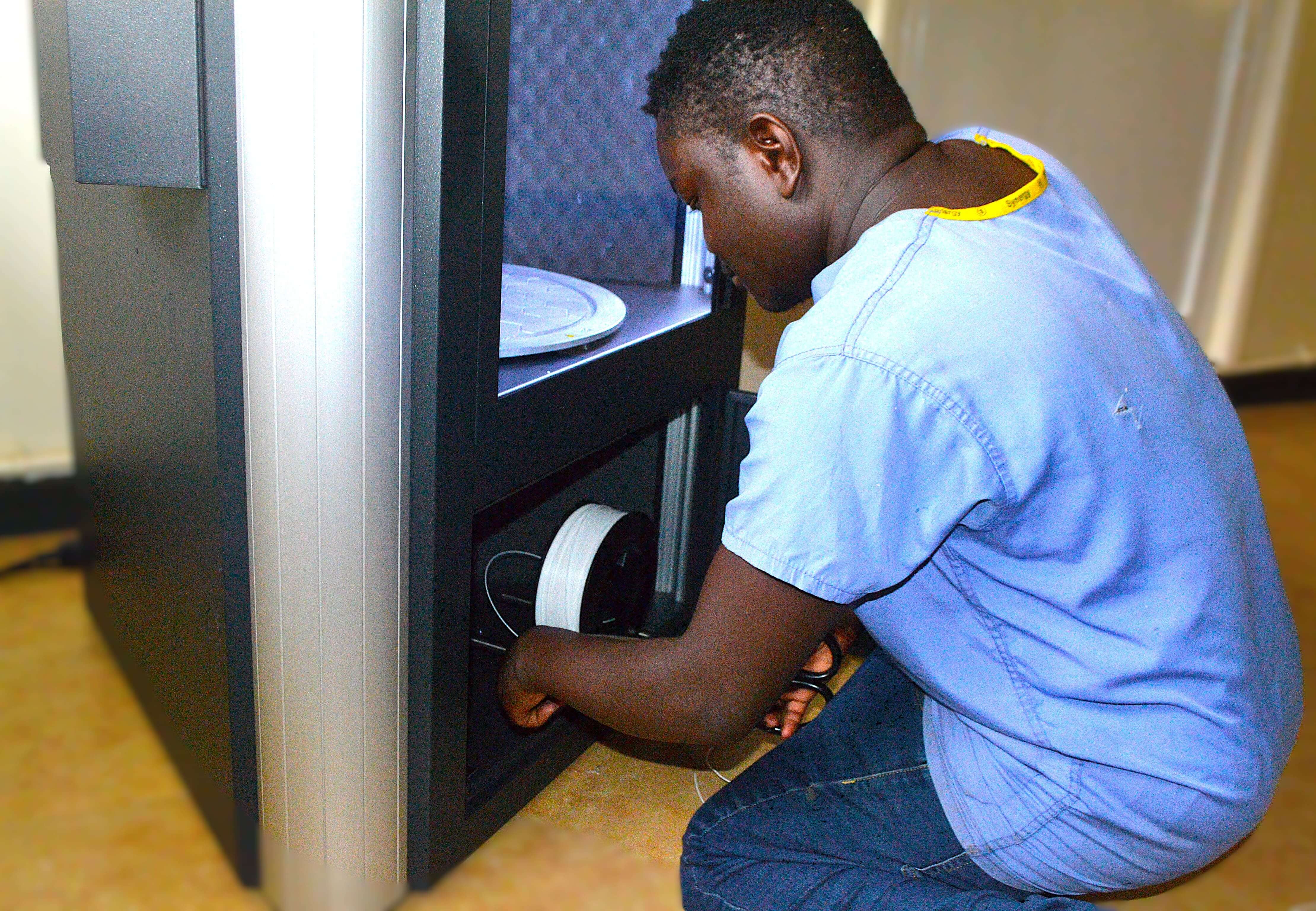
The newly renovated 3D Printing Unit at KCH’s Assistive Technology Centre.
With funding support from Humanity & Inclusion, KCH has renovated a dedicated facility specifically designed for the digital workflow. The building houses:
- An Assessment Area equipped with optical 3D scanners for patient assessment.
- A Computer Workstation Area where digital models are refined using specialized CAD and slicer software.
- A 3D Printing Production Room housing modern 3D printers for manufacturing custom limbs and braces.
The new 3D printing unit expands KCH ATC’s existing five production lines, which currently include Metal/Welding, Carpentry, Leather, and Aluminum sections. Together, these sections produce a comprehensive spectrum of mobility aids, including orthopedic shoes, Steenbeek Foot Abduction Braces (SFABs), wheelchairs, limb calipers, Ankle Foot Orthoses (AFOs), Knee AFOs and a variety of splints.
Understanding the Terms: Quick Reference
1. Orthotics & Prosthetics:
Prosthetics are artificial limbs designed to replace a missing body parts forexample Above Knee (AK) protheses, Below Knee (BK) Protheses, Upper limb protheses among others.
Orthotics are external assistive technologies such as braces, calipers, or custom insoles designed to align, support, or correct the function of a movable body part.
2. Industry 4.0 & Additive Manufacturing:
Industry 4.0 refers to the modern era of industrial automation, smart technology, and data-driven manufacturing.
Additive Manufacturing (3D Printing) creates three-dimensional solid objects from a digital file by building them layer by layer, minimizing raw material waste and allowing hyper-customized production.
Event Details: Official Launch Ceremony
Date: November 12, 2026
Location: Katalemwa Cheshire Home (KCH), 8KM Off Gayaza Road, Mpererwe, Buwambo Road
Key Highlights: Live demonstration of 3D scanning and printing, tour of the renovated ATC unit, and testimonies from beneficiaries.
Members of the press are invited to attend. High-resolution photos, b-roll footage, and interview opportunities with technical experts, leadership, and beneficiaries will be available upon request.
About Katalemwa Cheshire Home (KCH)
Katalemwa Cheshire Home is a non-governmental organization in Uganda dedicated to providing comprehensive rehabilitation services to children and young persons with disabilities and their families. KCH offers holistic rehabilitation care, including physiotherapy, occupational therapy, pre- and post-surgical care, fabrication of assistive technologies in our ATC, education support, and socio-economic empowerment.
About Humanity & Inclusion (HI)
Humanity & Inclusion is an independent international aid organization working in situations of poverty and exclusion, conflict, and disaster. HI works alongside persons with disabilities and vulnerable populations to take action and raise awareness to respond to their essential needs, improve their living conditions, and promote respect for their dignity and fundamental rights.
END